
Key Takeaways
- A permit for fence in Bucks County PA is issued by your township or borough, not the county.
- Most municipalities require a zoning permit, and some also require a building permit.
- Height limits commonly differ between front yards and side or rear yards.
- Pool fences follow stricter safety codes than ordinary privacy or decorative fences.
- Pennsylvania contractors doing $5,000 or more in home improvements yearly must register with the state.
- Skipping the permit can mean doubled fees, stop-work orders, or tearing the fence down.
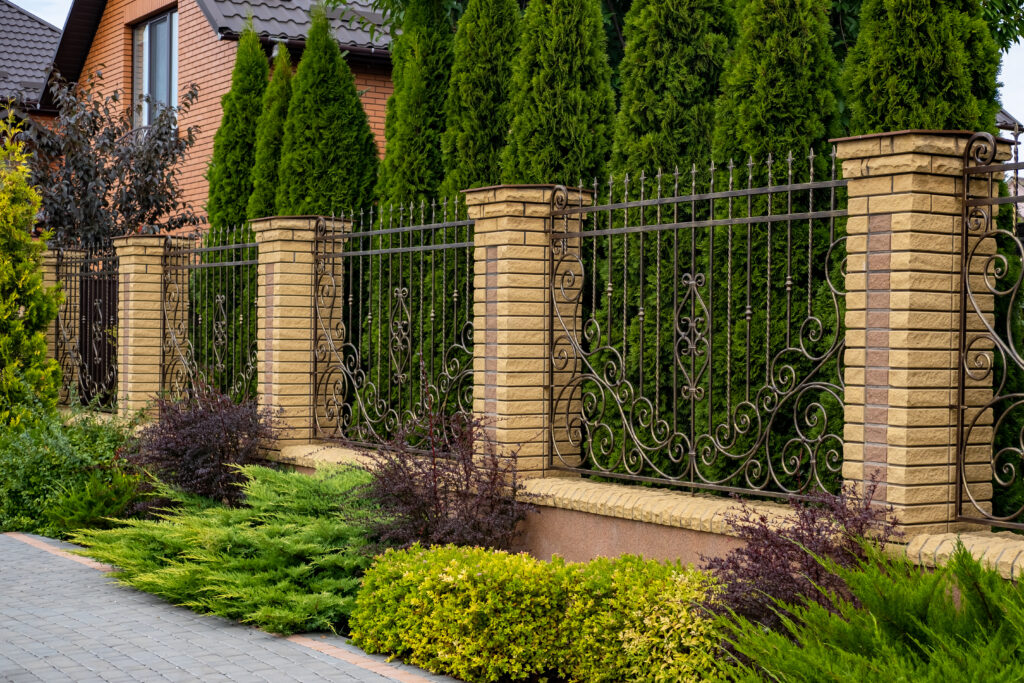
Most homeowners find out they needed a fence permit in Bucks County PA after the posts are already in the ground. By then the options are expensive: pay a penalty, move the fence, or remove it entirely. That is a painful way to learn that permitting here happens at the municipal level, where Doylestown Township, Newtown, Buckingham, and Lower Southampton each write their own rules.
This guide walks through who needs a permit, what documents you will be asked for, how height and setback limits work, what the process costs, and how to vet a contractor so the paperwork is handled correctly the first time.
Who Actually Issues Fence Permits in Bucks County?
Bucks County itself does not run a residential fence permit office. Your permit comes from the zoning or code enforcement department of the township, borough, or city where the property sits.
That matters because two neighbors a mile apart can face different height caps, different fees, and different inspection requirements. Newtown Township confirms that a permit is required to install a fence, and Doylestown Borough requires a permit for any fence installation, plus replacement or repair work exceeding 50 percent of the existing fence’s value. Springfield Township requires a zoning permit along with a sketched plan of the proposed fence, and caps fence height at seven feet.
The safe assumption across Bucks County is simple: you need a permit unless your municipality tells you in writing that you do not.
Zoning Permit vs. Building Permit
These are not the same document, and some townships want both.
A zoning permit confirms your fence complies with local land use rules: where it sits relative to property lines, how tall it can be, and whether the material or style is allowed in your district.
A building permit applies when the structure itself needs code review or inspection. Most wood and vinyl residential fences do not trigger one, but masonry walls, tall enclosures, and fences tied into other structures often do.
| Situation | Zoning Permit | Building Permit | Notes |
|---|---|---|---|
| Standard 6 ft privacy fence, rear yard | Usually required | Usually not | Sketch plan and property survey typically requested |
| Fence replacement, same line and height | Often required | Rarely | Some boroughs exempt minor repairs below a value threshold |
| Pool barrier fence | Required | Commonly required | Reviewed under state-adopted pool and spa safety code |
| Masonry or retaining wall with fence on top | Required | Likely | Engineering details may be requested |
| Corner lot fence near the street | Required | Depends | Sight-triangle and secondary front yard rules apply |
Verify each line with your municipality before ordering materials, because fee schedules and code adoptions change.
Height, Setback, and Placement Rules
Three constraints drive almost every fence rejection in Bucks County.
Height. Front yard limits are almost always lower than side and rear yard limits. Doylestown Township, for example, permits fences up to six feet in front yards and up to eight feet in side and rear yards, while Lower Southampton limits fences to six feet and requires front yard fences to sit at least 15 feet from the street.
Setback. Your fence usually needs to sit fully on your property, not centered on the line. A current survey settles this before it becomes a neighbor dispute.
Finished side orientation. Many municipalities require the finished side of the fence to face outward toward neighbors and the street.
If you own a corner lot, expect a stricter review, since two sides may be treated as front yards. If your property sits inside an HOA, you also need association approval on top of the municipal permit, and the HOA may restrict materials and colors the township would happily allow.
Pool fences follow stricter federal pool barrier safety standards than ordinary privacy or decorative fences, often requiring specific latch heights and self-closing mechanisms.
How to Get a Fence Permit in Bucks County PA: Step by Step
- Identify your municipality. Use your tax bill or deed, not your mailing address. A Doylestown mailing address may fall under either the borough or the township, and they have separate offices and separate rules.
- Call or visit the zoning office. Ask which permits apply, what the fee schedule says, and whether a final inspection is required. Buckingham Township, for instance, requires a signed residential building and zoning application and a final inspection after the work is finished.
- Pull your property survey. Most applications require a plot plan showing lot lines, structures, easements, and the proposed fence location.
- Draw the fence on the plan. Mark height, material, gate locations, and distance from each property line.
- Submit the application and fee. Municipal fence permit fees in Bucks County are typically modest compared to the total project cost, and many townships publish the exact amount in an annual fee schedule.
- Contact PA One Call before digging. Pennsylvania law requires a call to 811 at least three business days before any digging, and when a homeowner hires a contractor, the contractor is responsible for making that call.
- Install, then schedule the inspection. If your township requires a final inspection, do not consider the job closed until it passes.
Expect the review to take days to a few weeks depending on the municipality and the season. Spring is the busiest window for custom fence installation timeline projects, so apply early.
DIY vs. Professional Fence Installation
Pros and Cons
DIY installation
- Pros: lower out-of-pocket cost, full control of the schedule, satisfying for experienced builders.
- Cons: you own the permit process, the survey interpretation, the 811 call, and any code violation. Post depth and frost heave mistakes show up a year later.
Professional fence installation
- Pros: permit handling, correct post setting, material sourcing, warranty coverage, and liability insurance if something goes wrong.
- Cons: higher upfront cost and scheduling lead time during peak season.
If you are fencing a flat rectangular rear yard with no pool and no slope, DIY is realistic. If your lot has grade changes, buried utilities, a pool, or an HOA review, hire residential fence contractors PA homeowners have vetted and verified.
Do and Don’t Checklist
Do
- Do confirm your exact municipality before filling out any form.
- Do get a current survey rather than trusting an old fence line.
- Do ask for the contractor’s state registration number in writing.
- Do tell your neighbors before crews arrive.
Don’t
- Don’t assume a replacement fence is exempt from permitting.
- Don’t start digging before utility marks appear.
- Don’t accept a verbal quote for a project of this size.
- Don’t let anyone talk you into skipping the permit to save time.
Hiring the Right Contractor: What Pennsylvania Law Requires
Homeowners often search for a fence contractor license Pennsylvania requirement and come away confused, because the state does not issue a general contractor license. Instead, the Home Improvement Consumer Protection Act requires contractors performing at least $5,000 worth of home improvements per year to register with the Pennsylvania Office of Attorney General. The law also sets minimum insurance requirements and mandates that contractors display their registration number in advertising and contracts.
So when you are comparing custom fence builders near me, ask three questions:
- What is your PA registration number, and may I verify contractor registration?
- Can you send a current certificate of liability insurance?
- Who pulls the permit, you or me, and is that cost in the quote?
An insured fence company will answer all three without hesitation. Vagueness on any of them is your signal to keep looking.
What Does a Fence Cost in Bucks County?
Fence installation cost PA varies more by material and terrain than by township. Wood and chain link sit at the affordable end, vinyl fencing options and ornamental aluminum in the middle, and custom cedar, composite, or masonry work at the top. Sloped lots, rocky soil, and long gate spans add labor.
Permit fees are a small slice of the total, usually well under a few hundred dollars. You can estimate your total fence cost to see how permits fit into your budget. The real financial risk is non-compliance. Lower Southampton Township notes that permit fees may be doubled for failure to pull permits, and that is before any correction work.
A Real-World Scenario
A homeowner in a Bucks County township installs a six-foot vinyl privacy fence along her front property line without applying for anything. A code officer sees it during an unrelated inspection and issues a violation, because the district caps front yard fences at four feet.
She now faces three costs: the penalty, the labor to reset the front run at a compliant height, and wasted material. A single phone call to the zoning office beforehand would have cost her nothing.
That pattern repeats every season across the county. The permit is not the obstacle. Not asking is.
Quick Answers: Fence Permit FAQ
Do I need a permit to replace an existing fence in Bucks County?
A: Usually yes. Many municipalities treat replacement as new installation, and some require a permit when repairs exceed a percentage of the fence’s value.
Who issues a fence permit in Bucks County PA?
A: Your township, borough, or city zoning and code office. The county does not issue residential fence permits.
How tall can my fence be?
A: It depends on your municipality and the yard. Front yard limits are typically lower than side and rear limits, and caps commonly fall between four and eight feet.
Do I need a permit for a pool fence?
A: Yes, and pool barriers are reviewed under stricter safety rules covering height, gate latching, and self-closing hardware.
Does my fence have to be inside my property line?
A: In nearly all cases yes, unless you have a written agreement with your neighbor. A current survey is the only reliable reference.
Do I have to call 811 before installing fence posts?
A: Yes. Pennsylvania law requires notification at least three business days before digging, and the contractor makes the call when one is hired.
Can my contractor pull the permit for me?
A: Often yes, though some municipalities require the property owner’s signature on the application. Confirm this in the contract.
What happens if I install a fence without a permit?
A: You may face doubled fees, a stop-work order, a violation notice, or an order to modify or remove the fence.
Does an HOA approval replace a township permit?
A: No. They are separate approvals and you may need both.
Glossary of Terms
- Zoning permit — Municipal approval confirming that a proposed structure meets local land use rules such as height, placement, and setbacks.
- Setback — The minimum required distance between a structure and a property line, street, or other feature.
- Plot plan — A scaled drawing of your property showing lot boundaries, buildings, easements, and the proposed work.
- HICPA registration — Registration with the Pennsylvania Office of Attorney General required of contractors performing $5,000 or more in home improvement work per year.

Conclusion
A fence permit in Bucks County PA is rarely expensive and rarely slow. What is expensive is guessing. Confirm your municipality, check the height and setback rules for your specific district, submit a clean plot plan, and make sure the 811 call happens before a single post hole is dug.
Handled properly, the permit protects your investment, keeps your property line defensible, and makes the fence an asset at resale instead of a disclosure problem.
Ready to get it done right? Contact our team today.