
Key Takeaways
- The best custom fence styles for Pennsylvania homes handle freeze-thaw cycles without shifting or cracking.
- Post depth matters more than material. Shallow posts fail first in PA soil.
- Aluminum and vinyl win on maintenance. Cedar and composite win on looks and privacy.
- Pennsylvania requires contractor registration under HICPA, not a trade license.
- Pool fences must meet barrier code, which rules out several popular styles.
- Always confirm your township’s setback and height rules before ordering materials.
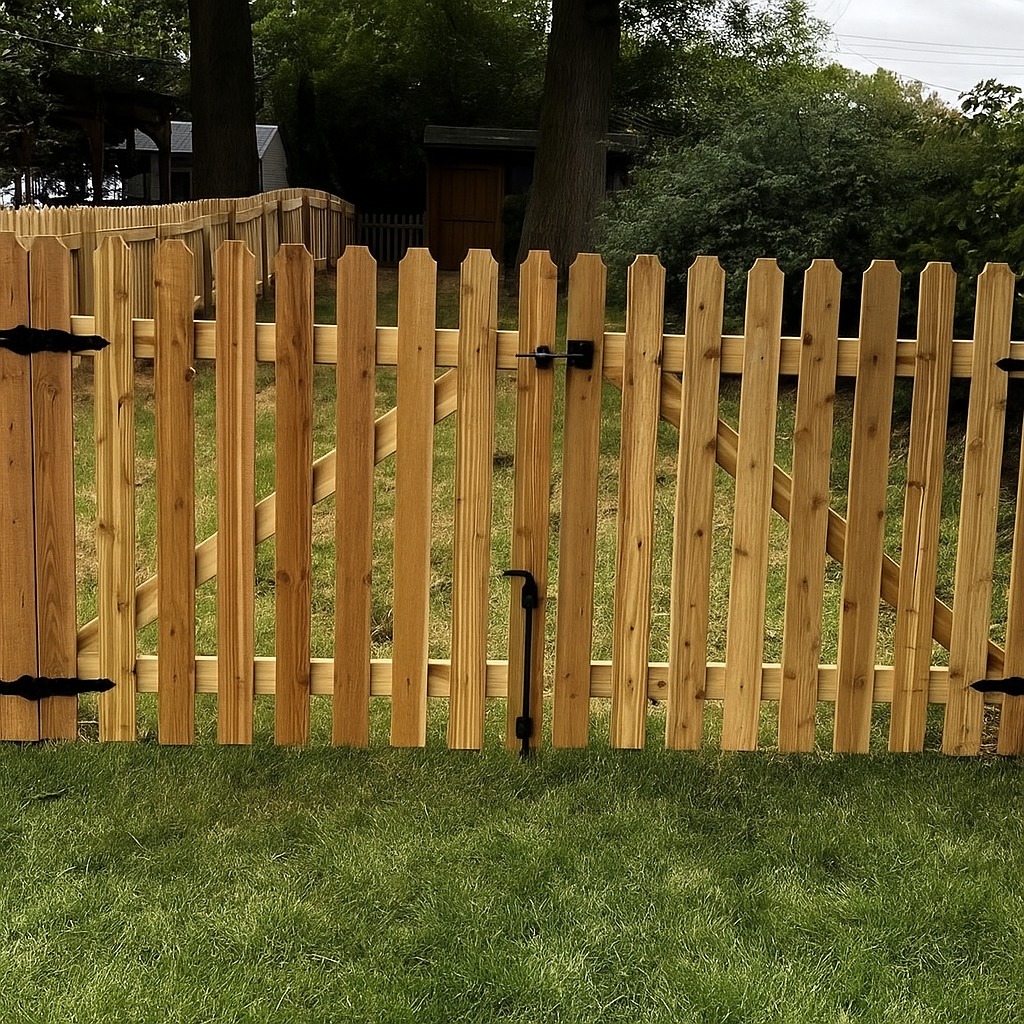
Choosing between custom fence styles for Pennsylvania homes is less about browsing photos and more about matching material to climate. A fence that looks perfect in a Florida showroom can warp, heave, or split after two Pennsylvania winters.
The state throws a specific set of problems at any fence: repeated freeze-thaw cycles, heavy clay soil in much of the southeast, wet springs, and townships that each write their own height and setback rules. Get the material right and you buy 20 to 30 years of quiet. Get it wrong and you are calling for repairs by year three.
This guide covers six styles that consistently perform here, what each one costs, where each one fails, and the exact steps to hire a residential fence contractor in PA without getting burned.
What Pennsylvania’s Climate Does to a Fence
Three forces do most of the damage.
Frost heave is the big one. Water in the soil freezes, expands, and pushes fence posts upward. Come spring, the soil settles but the post does not fully drop back. Repeat this for five winters and your straight fence line develops a visible wave.
The fix is depth. Most Pennsylvania municipalities require posts set below the local frost line data, which runs deeper in the northern tier than in the Philadelphia suburbs. Any contractor who quotes you a shallow post depth is quoting a fence that will move.
Moisture cycling splits wood. Boards absorb water in spring, dry out in August, and the repeated swelling opens checks and cracks along the grain. Kiln-dried cedar and composite resist this. Untreated pine does not.
Clay soil holds water against your posts and drains slowly. In heavy clay areas, gravel at the base of each post hole is not optional. It is the difference between a post that drains and a post that sits in a bathtub.
The 6 Custom Fence Styles That Work Here
1. Vinyl Privacy Fencing
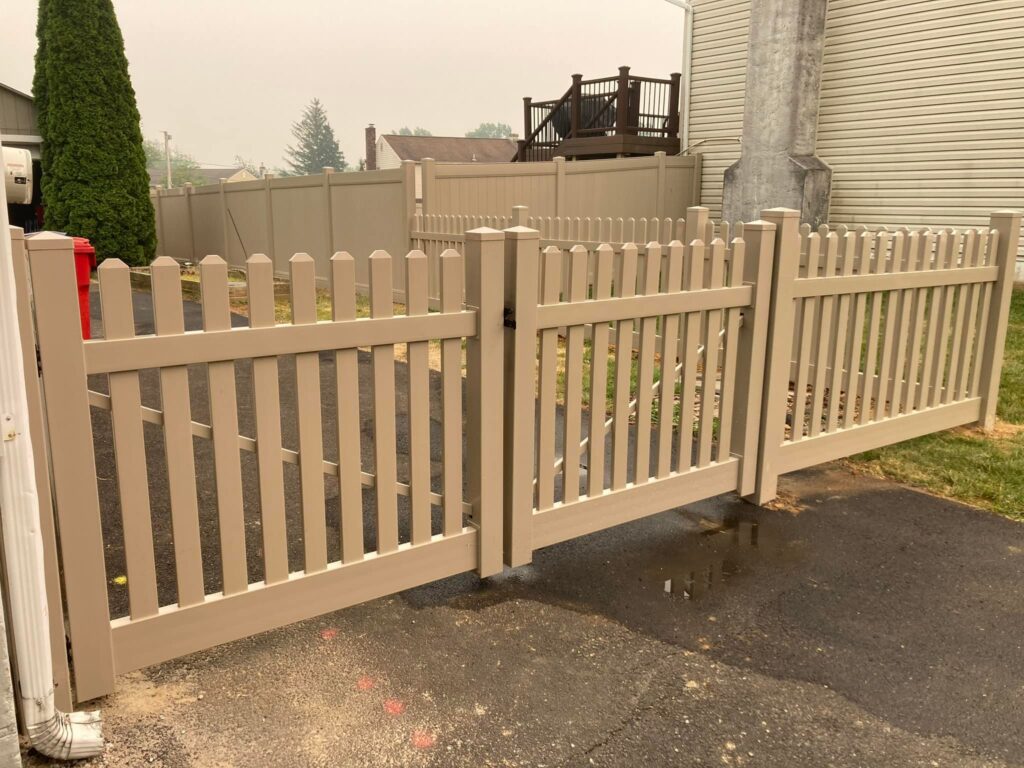
Vinyl privacy fencing is the most requested style in Pennsylvania residential work, and for a practical reason. It does not rot, does not need staining, and shrugs off moisture completely.
Quality varies enormously, though. Thin-wall vinyl turns brittle in deep cold and can crack under impact from a snow blower or a falling branch. Look for panels with internal aluminum reinforcement in the bottom rail and a UV inhibitor rated for northern exposure.
Best for: Homeowners who want full privacy and zero annual maintenance.
2. Cedar Board-on-Board
Cedar board-on-board styles mean overlapping vertical boards with no gaps, even after the wood shrinks. Standard stockade fencing develops gaps as boards dry. Board-on-board does not.
Western red cedar carries natural oils that resist rot and insects without chemical treatment. Left alone it weathers to a silver gray. Sealed every few years it holds its warm tone.
Best for: Character-rich properties, older homes, and anyone who wants a fence that looks better than it did the day it went in.
3. Aluminum Ornamental
Aluminum ornamental fencing is the quiet workhorse of Pennsylvania fencing. It will not rust like wrought iron, it handles snow load, and it satisfies pool barrier requirements when specified correctly.
It gives you almost no privacy, which is the entire point for some properties. If you have a view worth keeping, aluminum defines the boundary without blocking it.
Best for: Pool enclosures, front yards, sloped lots, and HOA neighborhoods with strict design rules.
4. Composite Fencing
Composite blends wood fiber with polymer. You get the visual weight of wood and the maintenance profile of vinyl. It is the most expensive option on this list by a meaningful margin.
The trade-off worth knowing: composite is heavy. It needs a stronger post system and more careful installation than vinyl, which means custom fence installation in PA for composite takes longer and costs more in labor.
Best for: Homeowners planning to stay 15-plus years who want premium appearance without upkeep.
5. Split Rail with Wire Mesh
Split rail is a Pennsylvania classic, especially on larger lots in Bucks, Chester, and Lancaster counties. On its own it contains nothing. Add black-coated welded wire mesh on the inside face and it becomes a functional dog fence that still reads as rustic.
Locust and cedar rails last longest. Pressure-treated pine is cheaper and perfectly serviceable.
Best for: Properties over half an acre, horse fencing, and rural or semi-rural aesthetics.
6. Horizontal Slat (Modern)
Horizontal cedar or composite slats with narrow gaps have moved from architectural projects into mainstream residential work. The look is clean and contemporary.
One honest warning: horizontal boards sag more readily than vertical ones because gravity works across the span rather than along it. This style demands tighter post spacing and thicker board stock. Cheap horizontal fencing looks bad fast.
Best for: Modern and mid-century homes, courtyard screening, and pool surrounds where design matters.
Comparison Table
| Style | Material Cost | Maintenance | Lifespan in PA | Privacy | Pool Code Ready |
|---|---|---|---|---|---|
| Vinyl Privacy | Mid | None | 25-30 yrs | Full | Usually yes |
| Cedar Board-on-Board | Mid | Seal every 2-4 yrs | 15-25 yrs | Full | Usually yes |
| Aluminum Ornamental | Mid-High | None | 30+ yrs | None | Yes, when spec’d |
| Composite | High | Rinse only | 25-30 yrs | Full | Usually yes |
| Split Rail + Mesh | Low-Mid | Occasional rail swap | 15-20 yrs | None | No |
| Horizontal Slat | Mid-High | Varies by material | 15-25 yrs | Partial to full | Depends on gap width |
Total fence installation cost depends far more on linear footage, gate count, and terrain than on material alone. A sloped, rocky lot can add 30 percent to labor regardless of what you picked.
Pros and Cons: Wood vs. Low-Maintenance Materials
Wood (cedar, pine, locust)
Pros:
- Lower upfront cost than composite or premium vinyl
- Individual boards can be replaced cheaply
- Can be stained any color, and restained later
- Natural appearance that improves as it weathers
Cons:
- Requires sealing or staining on a cycle
- Susceptible to warping and cupping in wet springs
- Ground-contact posts eventually rot
- Color fades unevenly on sun-exposed runs
Vinyl, aluminum, and composite
Pros:
- Effectively zero annual maintenance
- No rot, no insects, no staining
- Consistent color across the full run
- Longer warranties, often transferable
Cons:
- Higher upfront investment
- Damaged panels usually mean replacing the whole section
- Color is permanent, so a style change means a new fence
- Vinyl becomes more brittle in extreme cold
How to Hire a Fence Contractor in Pennsylvania: 7 Steps
- Verify their HICPA registration. Pennsylvania does not issue a fence contractor license. It requires home improvement contractors doing more than a minimal annual volume to register with the Office of Attorney General. Ask for the registration number and verify it through the Attorney General’s office.
- Confirm insurance independently. Request a certificate of insurance sent directly from the insurer, not a PDF from the contractor. An insured fence company will have no issue with this.
- Call your township first. Height limits, setbacks, corner-lot visibility rules, and local permit requirements are all local. Some townships also require the finished side to face outward.
- Call PA One Call before any digging. Utility marking is a legal requirement in Pennsylvania, and it is free. Your contractor should handle this.
- Get three itemized quotes. Line items should specify post depth, post material, concrete, gravel, gate hardware brand, and cleanup. A single lump sum tells you nothing.
- Verify the property line. A survey costs a fraction of what it costs to move a fence. This is the single most common source of neighbor disputes.
- Put the schedule in writing. Include start date, completion window, payment milestones, and what happens if materials are backordered. For more on scheduling, review our guide on the typical installation timeline.
Do and Don’t
Do:
- Set posts below the local frost line, every time
- Use gravel at the base of every post hole for drainage
- Choose gate hardware rated for exterior cold weather
- Plan gate widths around your mower and any equipment
- Photograph the property line and neighbor conversations
Don’t:
- Order materials before your permit is approved
- Assume a neighbor’s verbal approval is binding
- Pay more than a third up front
- Install wood posts in direct ground contact without treatment
- Let a contractor skip the utility marking call
If This, Then That
- If you have a pool, your fence must meet barrier requirements: specific minimum height, restricted gap widths, no horizontal climbable elements on the outside face, and self-closing, self-latching gates. That points you toward aluminum ornamental or a properly specified vinyl privacy panel. Split rail is out.
- If your lot slopes significantly, choose a style that racks. Aluminum and most wood fences follow grade smoothly. Rigid vinyl panels often require stepping, which leaves triangular gaps under each section.
- If your neighbors are close and you want quiet, solid vinyl or board-on-board cedar with no gaps will do more for sound than any decorative option.
- If you plan to sell within five years, aluminum or vinyl protects resale value better than a wood fence that will need attention from the new owner.
A Real World Scenario
A homeowner in Montgomery County wanted privacy fencing along a 180-foot rear boundary on a lot with heavy clay and a gentle back-to-front slope.
The first quote came in low and specified shallow post settings with no gravel. The second specified deeper posts, gravel drainage at each hole, and vinyl panels with reinforced bottom rails, at roughly 20 percent more.
The homeowner went with the second option. Three winters later the line is still true. The cost difference amounted to a rounding error spread across the fence’s expected life. The lesson repeats constantly in this trade: the visible parts of a fence are not where the money should go.
Quick Answers: FAQ
What is the best fence material for Pennsylvania weather?
A: Vinyl and aluminum handle freeze-thaw cycles best because neither absorbs moisture. Cedar performs well too when posts are set properly and the wood is sealed on a cycle.
Do I need a permit to install a fence in Pennsylvania?
A: It depends entirely on your municipality. Many townships require a zoning permit even when no building permit is needed, so call before ordering materials.
Is there a fence contractor license in Pennsylvania?
A: No statewide trade license exists for fencing. Contractors must register under the Home Improvement Consumer Protection Act, and some municipalities add their own requirements.
How deep should fence posts go in PA?
A: Below the local frost line, which varies across the state. Your township will specify the minimum, and a good contractor will meet or exceed it.
How long does custom fence installation in PA take?
A: A typical residential fence takes two to four days of installation once materials arrive. Permits and material lead times usually add two to six weeks.
Which fence adds the most home value?
A: Aluminum ornamental and quality vinyl generally protect resale value best, because buyers see no deferred maintenance.
Can I install a fence directly on the property line?
A: Legally possible in many townships, but rarely wise. Setting it a few inches inside your line avoids disputes and keeps maintenance access on your side.
What is the cheapest fence that still lasts?
A: Split rail with welded wire mesh. It gives you containment and boundary definition at the lowest cost per foot.
Glossary of Terms
- Frost line: The maximum depth at which soil freezes in a given area. Fence posts set above it are prone to heaving.
- Racking: A fence panel’s ability to flex and follow sloped ground without leaving gaps at the bottom.
- Board-on-board: A privacy fence design with overlapping vertical boards, so no gaps appear as the wood dries and shrinks.
- HICPA: The Home Improvement Consumer Protection Act, Pennsylvania’s law requiring most home improvement contractors to register with the state.
Conclusion
The right fence for a Pennsylvania home is the one that survives the ground it stands in. Vinyl and aluminum buy you freedom from maintenance. Cedar and composite buy you appearance. Split rail buys you coverage over large acreage at the lowest cost.
What none of them survive is bad installation. Post depth, drainage, and gate hardware decide whether your fence looks the same in year ten as it did in week one.
Before you commit, confirm your township’s rules, verify your contractor’s registration and insurance, and insist on an itemized quote that spells out what goes underground.
Ready to get it right the first time? Request a free on-site estimate and we will walk your property line, check your township’s requirements, and give you an itemized quote with no pressure.